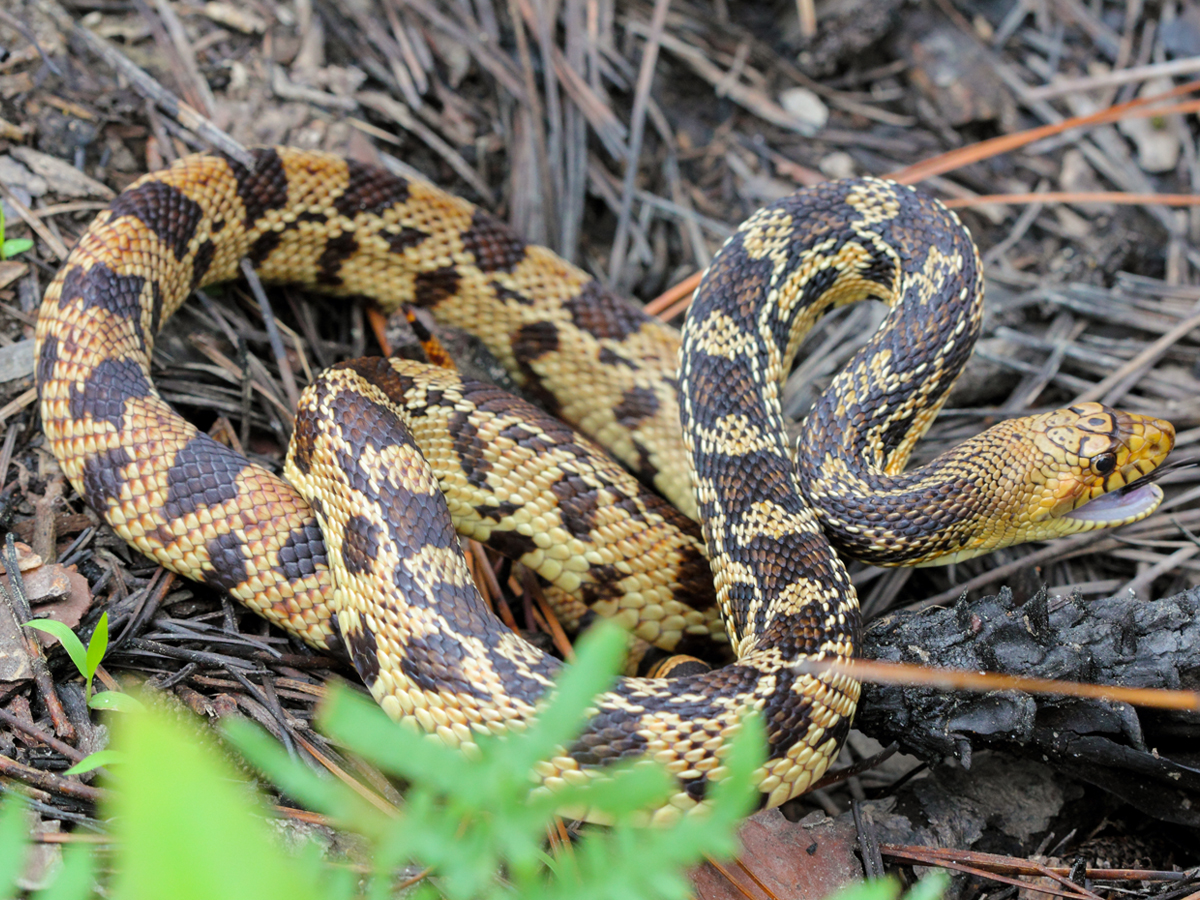
Osprey
-
Scientific Name:
Pandion haliaetus Native
Description
Large raptor with long, relatively narrow wings. Head is mostly white with a dark line through the eye extending to nape. Rich dark brown above, mostly white below. Distinct crook in wings at wrist visible when in flight. Adults approximately 22 inches tall with a wingspan of about 5.8 feet (70 inches).
Range and Habitat
Breeding range is from southern Canada and Alaska, western United States, Gulf of America, U.S. Atlantic coast, south along both coasts to Belize. Winters in southern parts of its breeding range and South America. In Louisiana, winters along the coast or larger inland lakes. Prefers habitats with adequate supply of shallow water prey and open nesting areas without predators.
Behavior
Dives for prey feet first, feeding on fish that school at the surface. Builds nests using large sticks and grasses. Nests can weigh up to 1/2 ton. Often reuses nests for several years. Increasingly uses artificial nesting sites such as telephone poles and communication towers. Lays two to four eggs per clutch from January through April. Eggs are creamy white to pinkish cinnamon and heavily dotted in reddish brown. Males and females both incubate the eggs for 28 to 43 days. Young fledge (develop feathers for flight) at 7 to 8 weeks.
Population Status
Ranked as S2B (breeding population is imperiled) and S3N (nonbreeding population is rare and found locally). Threats to population include chemical pollution, collisions with vehicles, and loss of nesting sites due to agricultural development and logging. One of the most successful conservation stories of any species, the United States' 1972 ban of the pesticide DDT, which thinned eggshells, allowed for quick population recovery.