Official Louisiana State Websites use .la.gov
  Secure .gov websites use HTTPS
Eastern Hog-nosed Snake
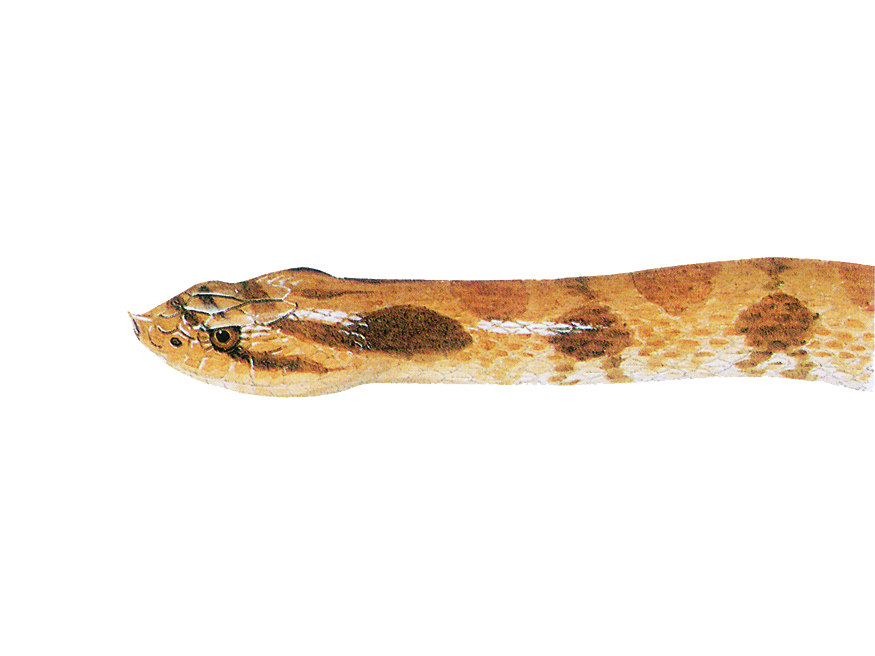
Scientific Name: Heterodon platirhinos
Terrestrial
Native
Snakes
Nonvenomous
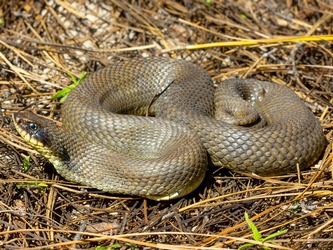
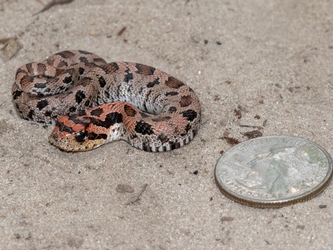
Adults are usually 25 to 33 inches long. Species is named for its pronounced upturned snout which ends in a point. Variable in color; gray or brown along back with a pattern of dark blotches/spots. Some are black with red patterning along sides and belly; Juveniles are lighter and can be patterned similar to adults but often with a pinkish/orange wash.
Range and Habitat
Found throughout the state in non-wetland habitats but may be found along margins of wetlands. Favor dry habitats with loose soils, preferably in mixed wooded and open country.
Behavior
Hog-nosed snakes rarely bite but have a surprising repertoire of defensive behaviors. Upon first encounter, hog-nosed snakes will flatten and spread their necks in cobra-like fashion. They will then hiss and strike, although the striking behavior is all bluff and no bite. If these postures don't scare off the potential predator, the snake will roll onto its back and play dead, often regurgitating any recent meal. Feed primarily on toads and frogs. They lay from 7 to 44 (average 22) eggs.
Population Status
Ranked as S3 (rare and local). Species have become scarce over much of their former range. The reasons behind this decrease in abundance are unknown.
More Information
Amphibians and Reptiles of Louisiana: An Identification and Reference Guide
Eastern Hog-nosed Snake